
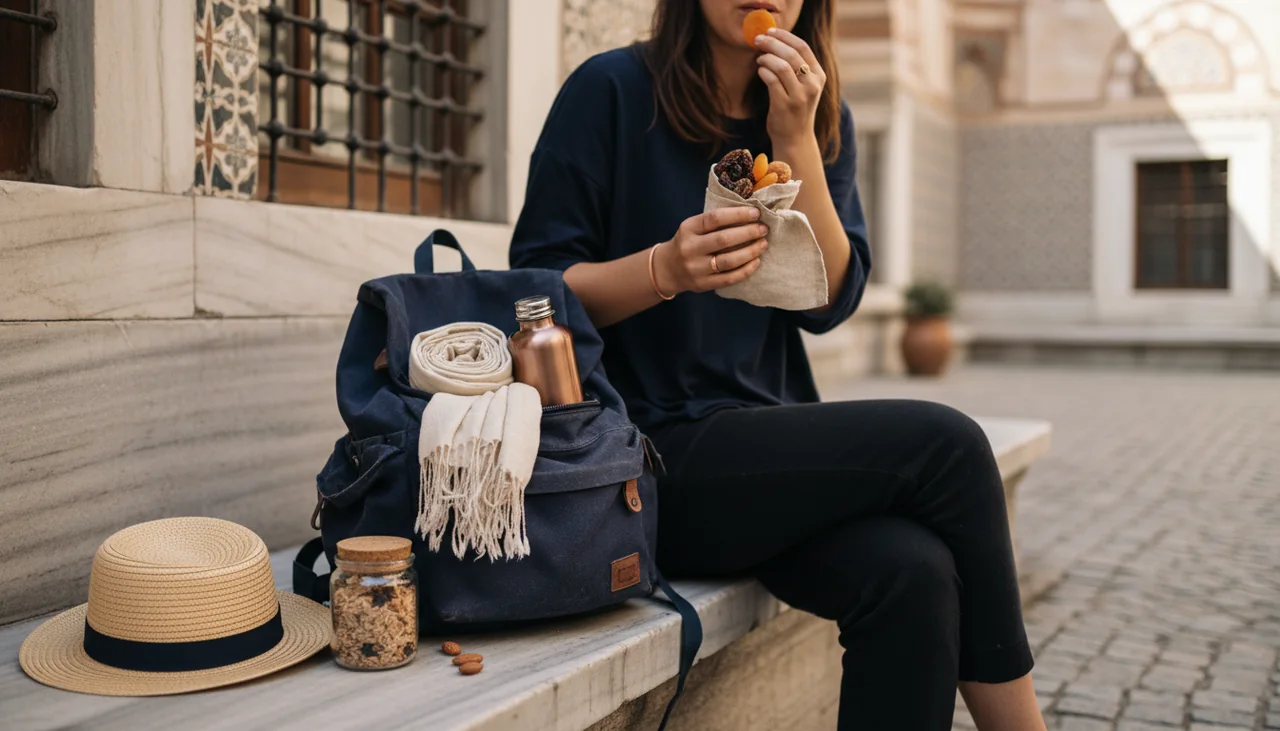
Meals drift on sightseeing days. You set out early in the morning, lunch lands in a museum queue, dinner slips to a late hour. In those gaps an energy dip affects both your walking pace and your enjoyment; and the choices made when hungry are generally not the best ones. A small snack plan is the easiest way to get through the day in better balance, and it takes almost no space in your bag.
What to carry in your bag
A good sightseeing snack meets three requirements: it does not melt, it does not get crushed, it does not smell. These three filters shorten the list by themselves.
- Nuts and dried fruit; they last a long time in a small volume
- Wholegrain crackers or grissini
- One durable piece of fruit, such as an apple or a mandarin
- A small packet of salted nuts; useful on hot days
- Water with you; this is the thing that works best alongside a snack
Chocolate and similar products struggle in a bag in summer; on hot days more durable options can be preferred. Rather than stuffing everything into the bag in the morning, carrying a day's amount keeps you light and keeps the food fresh.
Easy to find in the city
In Istanbul you do not have to carry everything with you; quick and filling options are common on the street and in shops. This lightens your bag even more and lets you try the city itself.
- Simit, the sesame bread ring, is the most practical in-between meal for a sightseeing day
- Stalls selling seasonal fruit are found in many neighbourhoods
- Ayran and mineral water are good companions on hot days
- Nut sellers sell by portion; buying a small packet is enough
- Small shops are everywhere in the city and are generally open until late
Tie the timing to the programme
Placing a snack into the day works better than eating it at random. The logic here is to eat before you get hungry, not when you do.
- Eat something light before a long museum visit or a queue
- A ferry trip is a natural snack break
- If dinner will be late, have a small snack in mid-afternoon
- Eating a little before a long, hilly stage keeps up your pace
The aim is not to get full but to avoid arriving at dinner overly hungry; this generally affects both the portion and digestive comfort positively. Having the snack with water also supports your sense of energy; on a long walking day, part of the tiredness actually comes from too little fluid.
Groups, children and special diets
Planning snacks matters even more when you travel in a group, because people get hungry at different times and a single break does not save everyone. Carrying things that can be shared in small portions makes frequent short breaks easier. When you travel with children, a familiar snack saves the day when they do not want to try a new taste.
If you have a known allergy or a diet you follow, carrying a few options you trust removes the hassle of searching on the road. Reading the ingredient list on packaged products and asking about the contents of street food is the most practical approach; nuts and sesame can turn up in unexpected places, such as sweets. If you have a medical condition related to your diet, it is best to talk through your travel plan with a health professional.
In short
A snack plan is a quiet support that keeps a sightseeing day going: a few durable options in your bag, practical alternatives you can find in the city, timing tied to the programme, and water with you. Once these are in place, you finish a long Istanbul day without an energy dip.