
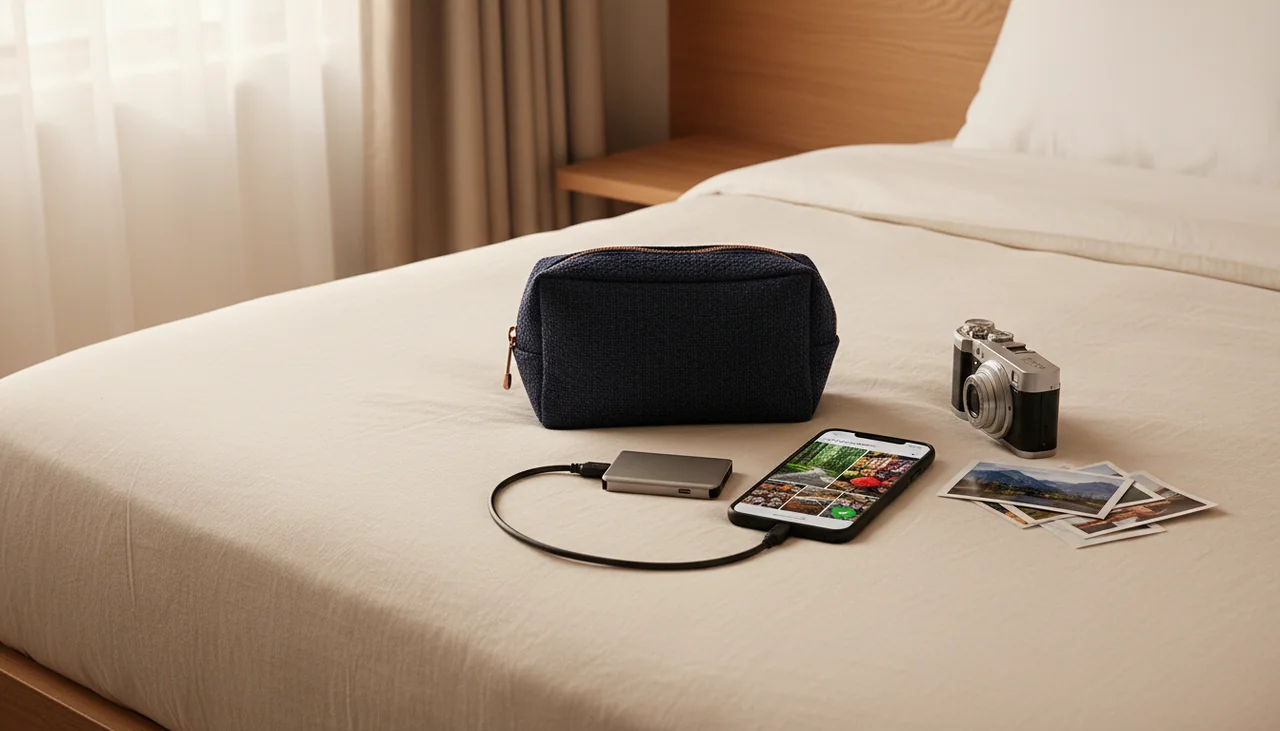
On the way home from a trip, everything in your bag can be replaced; your photos cannot. Even so, backing up is usually left until the return, and when the phone is lost, stolen or broken, that is the one thing that cannot be recovered. The good news: a daily backup habit takes no more than a few minutes, and once it is set up it runs by itself.
A daily backup habit
The method that works best is to tie the backup to your evening routine. That way it stops being a separate job you have to remember; it sits on top of something you already do.
- When you get back to the hotel, start the backup as you put the phone on charge
- If you use automatic backup, set it to run on Wi-Fi only
- Check from time to time that the backup has really finished; assuming it is on is not enough
- If your cloud account's storage is full, the backup stops silently; check this before you leave
A second copy is always valuable: next to a cloud backup, a small portable drive or a second device removes the dependence on a single point. If you are travelling together, sharing the day's photos in the evening also creates a natural second copy.
Solve the space problem during the day
Storage that fills up in the middle of a trip creates the most annoying moment, and it usually happens just when you most want to take photos. Preventing this is a matter of small preparation.
- Leave enough free space before you set out
- Deleting obviously failed shots during the day frees up space quickly
- If you use a camera, carry a spare memory card and keep the full one in a separate place
- Video takes up a lot of space; being selective with long recordings keeps things balanced
- Clearing already backed-up photos off the device is the fastest way to free up space
Practical notes for shooting in Istanbul
The city is generous for photography, but a few rules and habits clearly improve the experience. Light and crowds are often more decisive than equipment.
- Early morning and sunset are advantageous for both light and crowds
- A ferry deck is one of the easiest places to shoot the city skyline
- In places such as mosques and museums the rules for photography are different; pay attention to signs and to the attendants' warnings
- When photographing people, asking permission is both courtesy and, in most cases, a requirement
- In bazaars and crowded areas, using your phone with both hands and standing to one side makes both the shot and your security easier
Loss, theft and sorting out on your return
The precautions against something happening to your device take a few minutes before you travel. None of them looks related to photos, but they are exactly what saves the photos.
- Make sure the screen lock is switched on
- Turn on the find-my-device feature before you travel
- Have a backup email address or recovery method set up
- Not keeping your photos only on the phone is the most effective protection
The journey home is a natural time to sort your photos; a few hours on a plane or train suit this job exactly. Sorting into folders by day or place, moving your favourites into a separate album and clearing out repeated shots both frees up space and pays off when you look back years later.
In short
The way to protect your photos is not better equipment but a simpler habit: a backup started as you plug in for the evening, a second copy, enough free space and a find-my-device feature switched on before the trip. These keep the one irreplaceable part of the trip safe.