
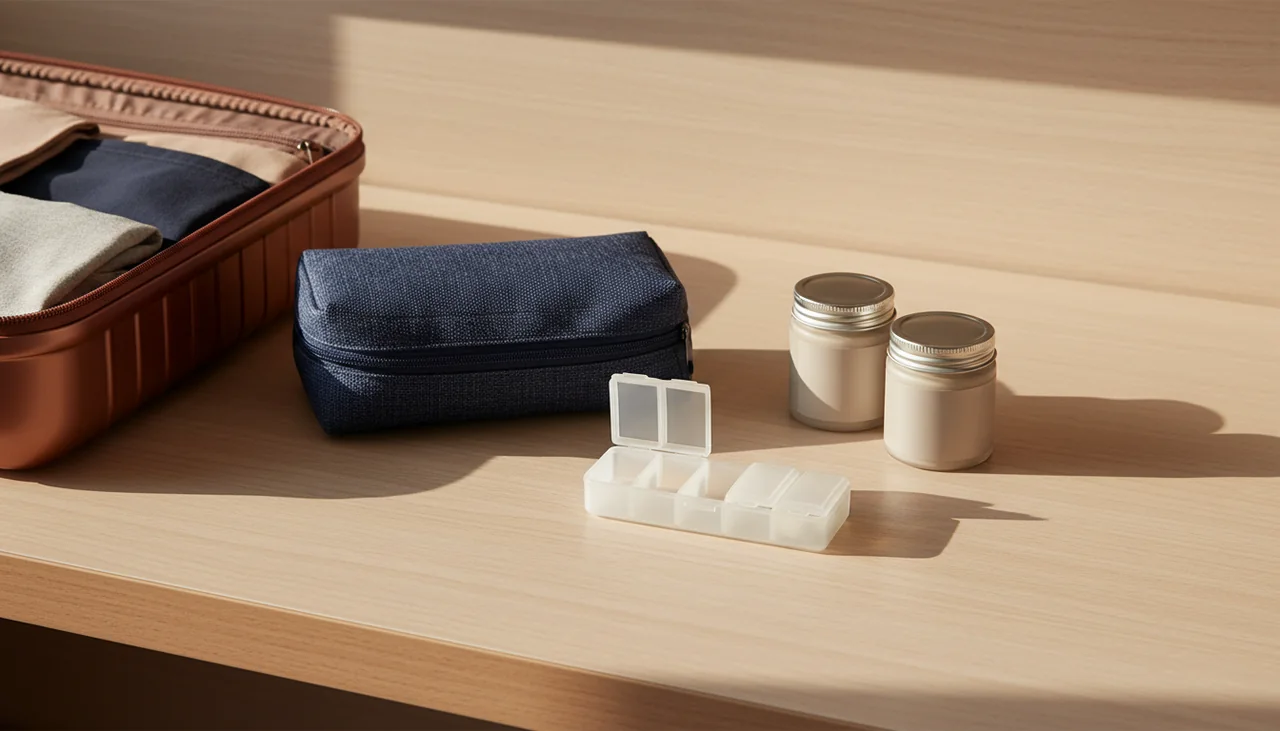
A supplement routine that is settled at home can easily fall apart while travelling. Flight times, different mealtimes and a day of sightseeing turn what you did automatically in the morning into something you have to remember in the evening. This guide is not medical advice; it is a practical planning approach for keeping up, on the road, the routine you already follow. If you are thinking of adding a new product, it is best to talk to a health professional before the trip.
Get your list clear before you leave
Writing down what you take makes it easier both to carry it and, when needed, to explain it to someone. This list is useful at the border if you are travelling abroad, and at the doctor's if you unexpectedly need medical care.
- Keep the product names and the amount you take each day in a written list
- If you take prescription medicines, carry them separately from supplements
- Carrying products in their original boxes makes them easier to explain during checks
- Keep a copy of the list on your phone and put another copy in your bag
If you take a prescription medicine, a short note from your doctor or a copy of the prescription saves you needless arguments, especially on international travel.
Carrying and storage
On a hot Istanbul day, products left in a bag are exposed to very different conditions from the cupboard at home. In summer, the inside of a car and bag pockets in direct sunlight get hotter than you would expect.
- Splitting daily doses into a small box with compartments both saves space and makes tracking easier
- Most products keep better when kept away from direct sunlight and damp
- Put liquid forms in a separate leak-proof bag
- On a long day out, carrying only that day's dose with you is enough
- Leave the main stock at the hotel, somewhere cool and shaded
In case your suitcase goes missing, carrying the products you take regularly in your cabin baggage is a common and sensible habit.
Tie the timing to the flow of the day
What is forgotten most often while travelling is not the time but the context. Tying a supplement to an event such as "after breakfast" rather than "at nine in the morning" works much better on the road, because breakfast happens whatever time it is.
- Tie the ones that need to be taken with a meal to breakfast or dinner
- Setting a single reminder on your phone still works in a different time zone
- If there is a time difference, making the change gradually rather than forcing it in one day is easier
- On long sightseeing days, tying the evening dose to the moment you get back to the hotel helps
Missing a dose while travelling is normal and usually no cause for worry. The risky approach here is doubling the amount yourself to make up for it. In that case, checking the product's own usage information and, if you are not sure, asking a health professional is the right course.
Interactions and allergies
Supplements can show unexpected interactions when taken with some medicines; this is the only topic that calls for stopping to think before buying a new product while travelling. If you are going to buy a product on the road, reading its ingredients, checking the labels if you have a known allergy, and getting expert advice when you are unsure is the most practical protection. In the same way, if you need to go to a health facility while travelling, it is important to tell them about the supplements you take as well; patients usually mention only their medicines and skip supplements.
In short
The secret of keeping a supplement routine going on the road lies more in set-up than in discipline: a written list, a small box with the daily doses separated, the main products carried in your cabin baggage, and a single reminder tied to a meal. If these four are ready, your routine will hold even on a busy Istanbul schedule.